


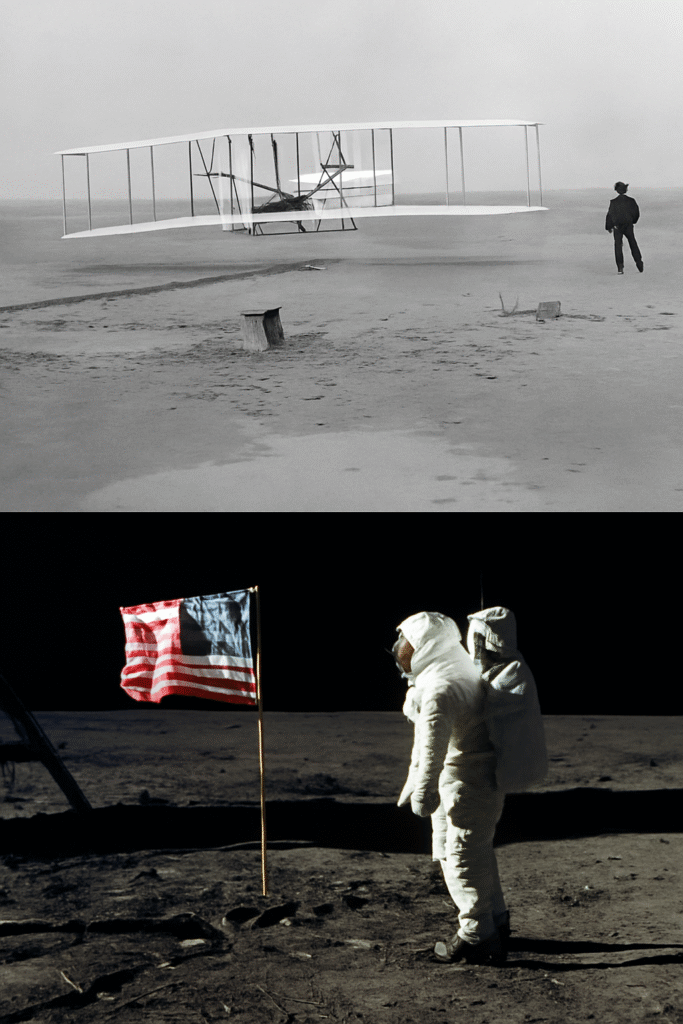
From the Wright brothers’ first flight in 1903 to the Apollo 11 moon landing in 1969, this image shows how far humanity advanced in just 66 years.
This powerful image juxtaposes two of the most iconic moments in human history, separated by only 66 years—a reminder of how quickly technological progress can transform the world.
Top Image: The Wright Brothers’ First Flight (1903)
Captured on December 17, 1903, at Kitty Hawk, North Carolina, this photograph shows Orville Wright piloting the Wright Flyer while Wilbur Wright runs alongside. This 12-second flight covered just 120 feet, but it marked the birth of powered human aviation. With wooden frames, fabric wings, and a 12-horsepower engine, the Wright brothers made the impossible possible, launching the age of flight.
Bottom Image: Apollo 11 Moon Landing (1969)
Just over six decades later, humanity took to the skies again—this time beyond Earth.

On July 20, 1969, NASA astronauts Neil Armstrong and Buzz Aldrin walked on the moon. This image shows them planting the American flag on the lunar surface, a moment that symbolized the peak of human engineering, bravery, and curiosity. The Saturn V rocket that launched Apollo 11 stood 363 feet tall and was capable of generating 7.6 million pounds of thrust.
Why This Image Matters
The leap from the Wright Flyer to the Apollo Lunar Module highlights the extraordinary velocity of innovation, driven by scientific exploration, global collaboration, and a relentless drive to push boundaries.From fragile wooden wings to high-tech space suits and lunar landers, the journey from Kitty Hawk to the Moon encapsulates the power of human vision, determination, and imagination see more.